Trump Again Targets Birthright Citizenship After Supreme Court Loss, Opening a New Legal Battle
President Donald Trump has renewed his long-running effort to restrict birthright citizenship in the United States, signing a fresh pair of executive orders just weeks after the Supreme Court dealt his previous attempt a decisive defeat. The move signals that the administration has no intention of abandoning one of its signature immigration priorities, even after the nation’s highest court firmly reaffirmed that citizenship is guaranteed to virtually all children born on American soil. The latest orders take a narrower approach than the original 2025 directive, but they are already being described by legal experts and civil rights groups as certain to trigger fresh rounds of litigation.
A Court Defeat That Didn’t End the Fight
To understand the significance of this week’s announcement, it helps to look back at what happened in June. On his first day back in office in early 2025, Trump signed a sweeping executive order attempting to deny automatic citizenship to children born in the United States unless at least one parent held legal status. The order was almost immediately challenged in courts across the country and was blocked before it could take effect nationwide.
That case eventually made its way to the Supreme Court, which heard oral arguments and ultimately issued its ruling on June 30. In a decision that amounted to a strong defense of the citizenship clause of the 14th Amendment, a five-justice majority held that children born on American soil are United States citizens regardless of their parents’ immigration status, a principle the court noted has stood for well over a century. A sixth justice, Brett Kavanaugh, arrived at the same result through a different route, concluding that the original order ran afoul of federal statute rather than the Constitution itself. Conservative justices who dissented did not dispute the core holding so much as argue that the ruling failed to address narrower abuses, such as so-called birth tourism.
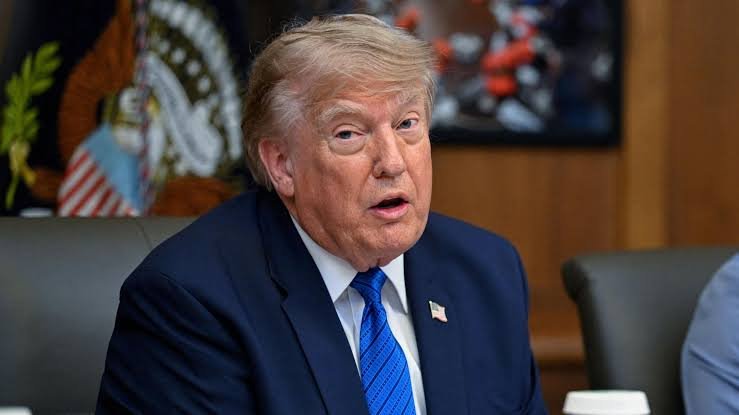
Speaking to reporters in the Oval Office this week, Trump described the June ruling as “very unfair” and made clear that he viewed the new orders as an alternate route toward the same underlying goal. He argued that the country continues to suffer as a result of current citizenship rules and said his administration intended to address the issue “a different way.”
What the New Orders Actually Do
Unlike the original 2025 order, which sought a blanket exclusion, the new directives are more surgical in scope. One order specifically targets what the White House calls “birth tourism,” the practice of foreign nationals traveling to the United States on temporary visas for the primary purpose of giving birth so their children can obtain automatic citizenship. Another order focuses on a narrower category: children born to individuals classified as “alien enemies,” members of designated foreign terrorist organizations, or people acting as agents of foreign governments, according to White House Deputy Chief of Staff Stephen Miller, who has been the chief architect behind the administration’s immigration agenda.
Administration officials argue these categories fall within exceptions to birthright citizenship that they say have long existed under the 14th Amendment, even if they have rarely been enforced. The orders direct federal agencies to issue public implementation guidance within thirty days. Miller framed the effort in dramatic terms, calling it an end to one of the most serious abuses of the American system and describing it as a measure that protects the integrity of citizenship itself.
When asked directly whether the new orders would survive judicial review, Trump expressed confidence they would, before turning the question over to White House Staff Secretary Will Scharf. Scharf argued that the administration was relying on legally validated tools aimed specifically at the birth tourism industry, insisting that nothing in the new orders conflicts with anything the Supreme Court said in its June opinion.
The State Department’s Groundwork
The push against birth tourism did not begin with this week’s signing ceremony. In the weeks following the Supreme Court’s June ruling, administration officials and allies increasingly shifted their focus toward visa enforcement as an alternative strategy. The State Department has said it identified hundreds of suspected birth-tourism cases and has already begun revoking visas from individuals accused of using visitor visas as a way to secure citizenship for their children born in the U.S. This groundwork suggests the new executive orders are meant to formalize and expand an enforcement approach that was already quietly underway.
Legal Pushback Begins Immediately
Civil liberties advocates wasted no time responding. The American Civil Liberties Union, which had challenged the original 2025 order and prevailed at the Supreme Court, issued a statement asserting that the justices had already settled this question and that birthright citizenship remains constitutionally guaranteed. The organization signaled it viewed the new orders as vulnerable to the same legal fate as their predecessor, describing birthright citizenship as a foundational element of American identity.
Legal scholars point out that the text of the 14th Amendment is unambiguous on its face, stating that all persons born or naturalized in the United States, and subject to its jurisdiction, are citizens. Historically, the “subject to jurisdiction” clause has been interpreted narrowly to exclude only very specific categories, such as children of foreign diplomats. Whether the administration’s new “alien enemies” and foreign-agent categories can be squeezed into that narrow historical exception is likely to become the central legal question in the litigation that follows.
The Political Backdrop
The renewed push comes against a backdrop of broader immigration enforcement actions that have defined Trump’s second term, and it follows a pattern seen elsewhere in his administration’s approach to adverse court rulings: rather than abandoning a policy goal after a loss, officials frequently look for a narrower or differently justified path to the same destination. Congressional Democrats have already begun voicing opposition to the new orders, framing them as a continuation of an agenda they view as constitutionally suspect.
For supporters of the administration’s approach, the new orders represent a pragmatic, incremental strategy: rather than attempting to overturn birthright citizenship altogether, the administration is targeting narrower categories it believes it can successfully defend in court. For critics, however, the strategy looks less like incremental policymaking and more like an attempt to chip away at a constitutional guarantee through repeated executive action, forcing opponents into a cycle of continuous litigation.
What Comes Next
Given the near-certainty of legal challenges, the coming weeks are likely to see a fresh wave of lawsuits filed by civil rights organizations, immigrant advocacy groups, and potentially state attorneys general who previously challenged the 2025 order. Courts will need to determine whether the narrower categories targeted this time, foreign agents, alien enemies, and birth tourism cases, can be squared with the Supreme Court’s emphatic June ruling or whether they represent the same constitutional overreach in a different form.
Whatever the outcome, this latest move ensures that birthright citizenship, one of the most consequential and long-settled areas of American constitutional law, will remain a live political and legal battleground well into the months ahead, with significant implications for immigrant families, visa policy, and the boundaries of executive power itself.