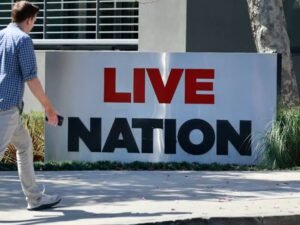
Justice Department Seeks Breakup of Live Nation in Landmark Antitrust Lawsuit
### Summary
The U.S. Department of Justice, joined by 30 states, has filed a major antitrust lawsuit against Live Nation Entertainment and its subsidiary Ticketmaster. The legal action aims to dismantle what federal officials call an illegal monopoly that has dominated the live music industry for over a decade, allegedly leading to higher ticket prices and fewer choices for American fans.
### Federal Regulators Target Live Music Dominance
The United States Department of Justice (DOJ) has launched a high-stakes legal battle against Live Nation Entertainment, the parent company of Ticketmaster, seeking to break up the concert giant. The lawsuit, filed in the U.S. District Court for the Southern District of New York, represents one of the most aggressive moves by federal regulators to date to challenge the consolidation of the live entertainment industry.
Attorney General Merrick Garland, alongside a bipartisan coalition of 30 state and district attorneys general, alleges that Live Nation has engaged in a pattern of anti-competitive behavior. The government argues that the company’s vast reach—spanning venue ownership, artist management, and ticket sales—has allowed it to maintain a “self-reinforcing” monopoly that effectively locks out competition.
### Why the Lawsuit Matters to U.S. Consumers
For millions of American music fans, the news strikes a chord after years of growing frustration over skyrocketing ticket prices and opaque “junk fees.” The DOJ asserts that Live Nation’s dominance has stifled innovation and allowed the company to impose higher costs on consumers than would exist in a competitive market.
According to the complaint, Live Nation uses its power to force venues into long-term, exclusive ticketing contracts. If a venue considers switching to a different ticketing provider, the lawsuit alleges that Live Nation often retaliates by withholding major concert tours, which are essential for venue revenue. This vertical integration means that one company controls nearly every aspect of the concert-going experience, from the performer on stage to the digital ticket in the fan’s smartphone.
### Background: A Decades-Long Debate
The roots of this legal challenge trace back to 2010, when the DOJ allowed the merger between Live Nation and Ticketmaster to proceed under a set of regulatory conditions known as a consent decree. Critics have long argued that those conditions were insufficient and that the company has repeatedly flouted the rules designed to prevent it from abusing its market power.
Public outcry reached a fever pitch in late 2022 following the catastrophic presale of Taylor Swift’s “The Eras Tour.” The technical failures and massive wait times experienced by fans became a catalyst for renewed political scrutiny, leading to congressional hearings and eventually the comprehensive DOJ investigation that culminated in this week’s filing.
### Who is Affected
The ramifications of this case extend beyond the average fan. Independent concert promoters and smaller ticketing platforms argue they have been systematically marginalized by Live Nation’s business practices. Furthermore, artists themselves—many of whom rely on touring for the bulk of their income in the streaming era—allegedly have few alternatives but to work with Live Nation if they wish to perform in major U.S. arenas and amphitheaters.
### What Happens Next
Live Nation has strongly denied the government’s allegations, calling the lawsuit “baseless” and arguing that the live music industry is more competitive now than ever before. The company contends that ticket prices are set by artists and their teams, while the majority of service fees are shared with the venues.
The legal process is expected to be a multi-year marathon. The DOJ is specifically asking the court to order the divestiture of Ticketmaster, effectively undoing the 2010 merger. While the immediate ticketing process for upcoming tours will remain unchanged for now, a government victory could eventually lead to a more fragmented and potentially more affordable marketplace for live events in the United States.