Reflecting Pool Controversy: DOJ Drops Case Against Ex-Olympian David Hearn, Exposing Major Government Missteps
WASHINGTON
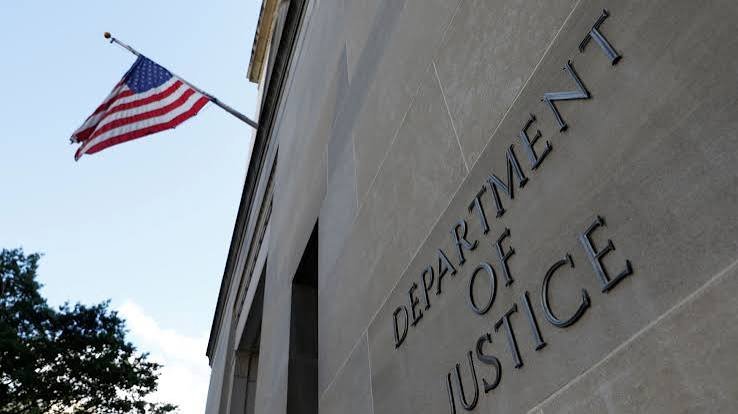
In a stunning reversal, the U.S. Department of Justice moved Friday to dismiss the criminal case against former Olympic canoeist David Hearn, who had been accused of deliberately damaging the Lincoln Memorial Reflecting Pool. Government attorneys now say newly discovered evidence shows the damage was not the result of vandalism at all, but rather the outcome of a botched installation job by a contractor and a rushed construction schedule.
What Happened
David Hearn, 67, of Bethesda, Maryland, represented the United States at three Summer Olympic Games, with his best finish — ninth place — coming at the 1996 Atlanta Games. The incident at the center of the case took place on June 19, when Hearn stopped by the Reflecting Pool during a bike ride. According to Hearn, he noticed that a section of the pool’s newly applied coating had begun to peel and curiously reached in to touch a loose piece attached to the pool’s edge. He says he immediately let go when a park worker instructed him to.
Despite this, Hearn was detained for roughly five hours by National Guard troops and U.S. Park Police. He was subsequently charged with a single felony count of destruction of government property, a charge carrying a maximum sentence of ten years in prison. Prosecutors alleged that Hearn had “forcefully and violently” torn up sections of the pool’s floor, causing at least $1,000 in damage. Earlier this month, Hearn pleaded not guilty, and his trial had been scheduled to begin September 28 in D.C. Superior Court.
Prosecutors Reverse Course
In a 20-page filing submitted Friday, the office of U.S. Attorney Jeanine Pirro acknowledged that information obtained since Hearn’s indictment demonstrates the damage stemmed from a “flawed installation by the contractor,” compounded by “the rush to complete the project prior to events associated with the America 250 celebration” around Independence Day 2026. The filing was blunt in its conclusion: given everything prosecutors have since learned, it is now difficult to attribute the widespread damage to vandalism, let alone prove it beyond a reasonable doubt.
Pirro’s office says it only became aware of this evidence after the grand jury indictment. Pirro herself visited the drained Reflecting Pool on July 17 and observed extensive damage throughout the site, prompting her office to request additional records from the Department of the Interior. Among the documents later produced was a June 11 email from a National Park Service engineer, warning colleagues within Interior about a one- to two-foot strip along the pool’s perimeter that was vulnerable to peeling due to overspray during the coating process — the very section Hearn was accused of pulling apart.
Prosecutors have asked the court to dismiss the indictment without prejudice, meaning the charge could theoretically be refiled if new evidence emerges. The filing also states plainly that had the Interior Department been forthcoming with this information from the start, prosecutors would never have sought the indictment in the first place.
A $16 Million Project Under Scrutiny
The renovation of the Lincoln Memorial Reflecting Pool was promoted as a signature beautification project under President Donald Trump ahead of the nation’s 250th anniversary celebrations. According to federal contracting records, Atlantic Industrial Coatings was paid more than $14.6 million to resurface the pool. The contract was awarded through a no-bid process, in part to expedite completion in time for July 4. Just last month, the company acknowledged in a public statement that “some areas” of the pool required repairs. Since the completion of the roughly $16 million renovation, the pool has been plagued by persistent complaints of algae buildup and peeling paint.
Hearn’s Legal Team Responds
Hearn’s attorneys — Norm Eisen, Mary Dohrmann and Steve Levin — issued a sharply worded joint statement following the dismissal. They argued that the case should never have been brought in the first place, and that its dismissal “does not erase the abuse of government power in arresting and charging a patriotic American who did nothing wrong.” The statement described the government’s handling of the matter as “ready, fire, aim,” and called on the administration to formally apologize to Hearn.
This is not the first time Hearn has faced federal charges. Nearly three decades ago, he was arrested by U.S. Park Police in connection with an unrelated incident and ultimately beat those charges as well. That earlier case coincided with a period of severe flooding on the Potomac River, when heavy rains pushed water levels to near-record highs.
Trump Reacts
The dismissal represents an embarrassing setback for a Justice Department that had initially framed the prosecution as a matter of accountability for damage to a national landmark tied to one of President Trump’s signature projects. Trump himself weighed in on Saturday afternoon, expressing frustration over the decision and suggesting there could have been some kind of misconduct involved, while questioning the reasoning behind Pirro’s move to drop the case. The U.S. Attorney’s Office has declined to comment further, and it remains unclear when the presiding judge will rule on the government’s motion to dismiss.
Hearn and His Supporters Push Back
Throughout the ordeal, Hearn and his supporters have maintained that the prosecution was politically motivated — an attempt by the Trump administration to shift blame away from a poorly managed, rushed renovation project and onto an ordinary citizen. With the Justice Department’s own filing now acknowledging that the real cause of the damage was a flawed installation process rather than any deliberate act, that argument has gained considerably more weight.
What Comes Next
The matter now rests with the presiding judge, who must decide whether to grant the prosecution’s request to dismiss the case. Because the motion seeks dismissal without prejudice, the government technically retains the option to refile charges should new evidence surface. Given the current circumstances, however, that outcome appears highly unlikely.
The episode underscores the risks that can accompany rushed government projects and no-bid contracting — risks that extend beyond financial cost to include real consequences for an individual’s reputation and liberty. As the dust settles, David Hearn’s case is likely to fuel further debate over government accountability, the vetting of federal contractors, and the processes agencies follow before pursuing criminal charges against private citizens.